
How to Make a 60 Degree Triangle Star Block!

Designer: Erin Kroeker
Website: www.theblanketstatement.ca
Instagram: @theblanketstatement
------------------------------------------------------
Skill Level: Beginner
Finished size: 6”, 12” or 18” Finished Block

The 60° triangle star block is a beautiful mix of bold geometry and classic design. If angles feel a little intimidating, this tutorial breaks everything down step by step, focusing on accurate cutting and simple, repeatable piecing so the process feels manageable, confidence-boosting and fun.
Throughout this tutorial, I’ll be making the 18″ block, but I’ve also included measurements for 6″ and 12″ finished blocks so you can easily scale the design to fit your own project.

Tools:
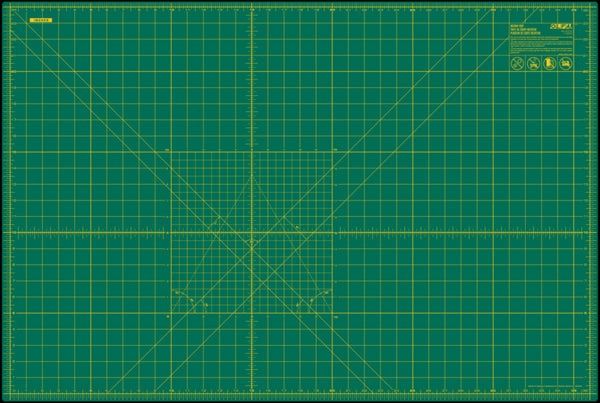
OLFA 24” x 36” Self-Healing Rotary Mat
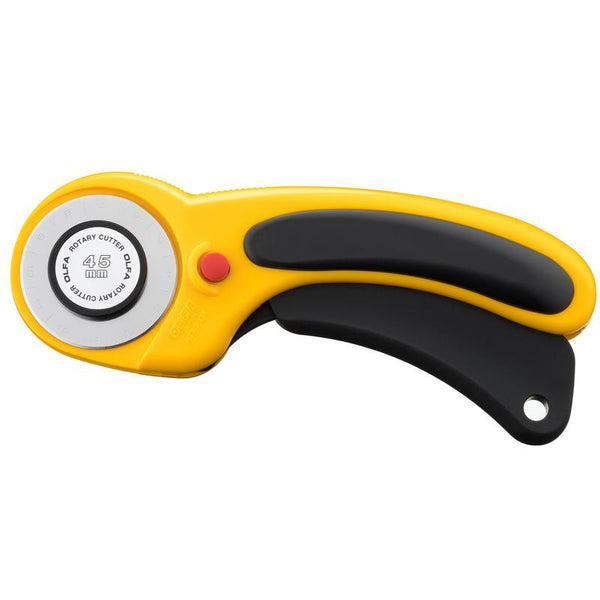
OLFA 45mm Ergonomic Rotary Cutter
OLFA 45mm Endurance Blades
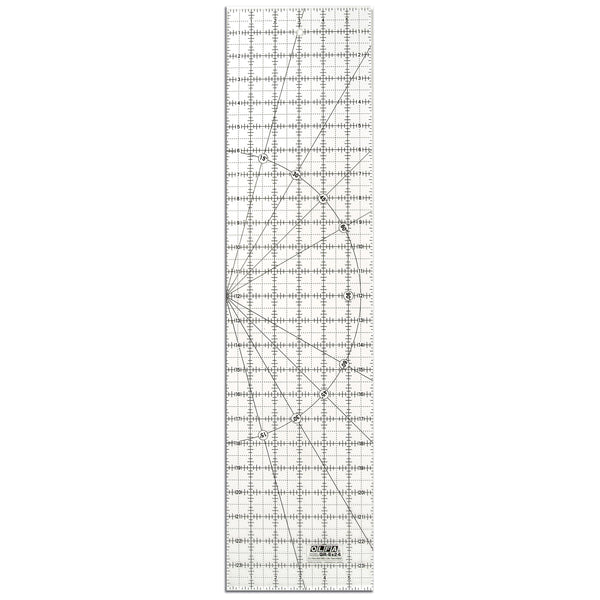
OLFA 6” x 24” Frosted Acrylic Ruler
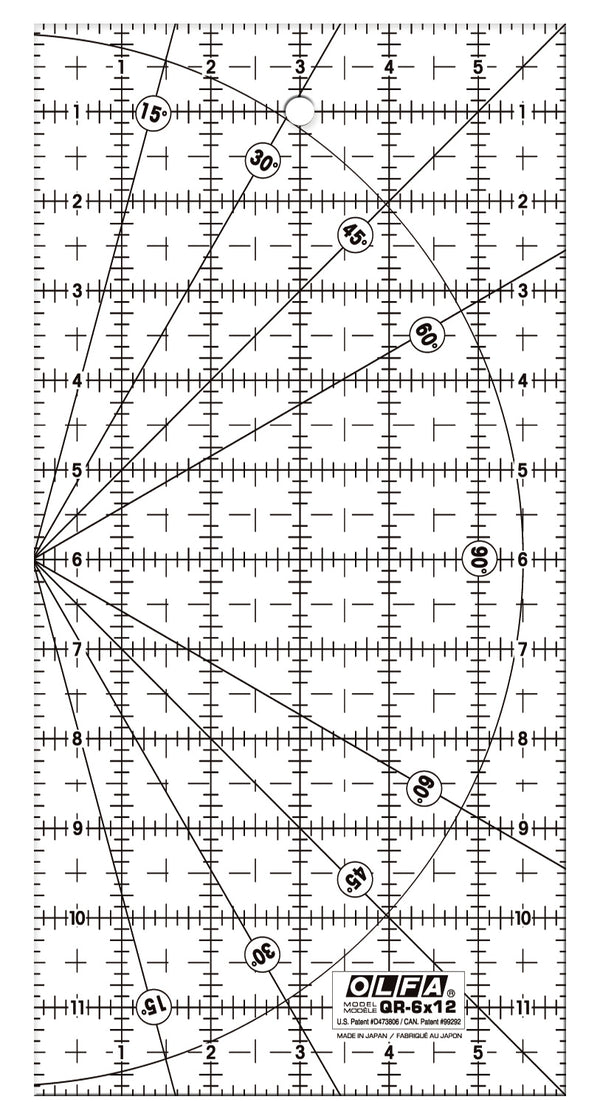
OLFA 6” x 12” Frosted Acrylic Ruler
*Optional OLFA 12.5” x 12.5” Frosted Acrylic Ruler
Fabric & Supplies:
Two Contrasting Fabrics - A & B
· For the 18” Block, you’ll need 1/3 yard each
· For the 12” and 6” block, you’ll need 1/8 yard each
Thread
Sewing Machine
Iron and Ironing Board
Pins

Step 1: Cut Fabric
TIP! Check out this blog post for an in-depth tutorial on how to cut and sew 60-degree triangles!
For an 18” finished block:
· A - (2) 5.25” x WOF; Sub-cut into (18) 5” 60-degree triangles
· B - (2) 5.25” x WOF; Sub-cut into (18) 5” 60-degree triangles
For a 12” finished block:
· A - (1) 3.75” x WOF; Sub-cut into (18) 3.5” 60-degree triangles
· B - (1) 3.75” x WOF; Sub-cut into (18) 3.5” 60-degree triangles
For a 6” finished flower block:
· A - (1) 2.25” x WOF; Sub-cut into (18) 2” 60-degree triangles
· B - (1) 2.25” x WOF; Sub-cut into (18) 2” 60-degree triangles


Step 2: Sew Rows
Arrange triangles into your block arrangement.

You will be sewing the rows together first.
Place the first two triangles right sides together and align the edges and tips carefully.

Sew together with a ¼" seam allowance.
Press seams open for the flattest results or press to one side if you like to nest your seams. Just be consistent!
TIP! Do not trim the “dog ears”!

Now add your next triangle to continue the row. Place RST and align the edges. The point of the triangle will align with the tip of the dog ear from the seam you previously sewed.

Sew with a ¼" seam allowance and press.

TIP! You should have ¼” overlap where the triangle points meet. This will be your seam allowance when sewing your rows together.

Continue adding triangles to complete the row. Repeat steps for all rows.


Step 3: Assemble the Block
Now you will sew the rows together in the final arrangement.
TIP! At this stage, the edges of the block will have a zigzag shape, but don’t worry! The block will be trimmed at the end.

Place the first two rows RST and pin where triangles meet, so your points stay sharp.


Sew a ¼” seam allowance along length of row and press.


Continue adding the last two rows in the same manner. Make sure to double check that you are lining up the rows correctly to maintain the final design!
 Once you’ve sewn all the rows together, give the block a good press!

Step 4: Trim the Block
The height of the block should already measure 18½″ from top to bottom, however you can trim if required.

To trim the zigzag edges, place the block on your cutting mat, right side up.
Using the grid lines on the mat, align the centre point of the block with the 9.25″ line at both the top and bottom. This centres the star and ensures even trimming on both sides.

Trim off the zigzag edges by cutting along the 0″ line on one side and the 18.5″ line on the opposite side.

The block should now measure 18.5″ × 18.5″ with clean, straight edges.
TIP! For the 6″ and 12″ finished blocks, use your 12.5″ frosted ruler to square the block: trim the smaller block to 6.5″ × 6.5″ and the larger block to 12.5″ × 12.5″, centring the block before trimming.
Way to go, you did it!

Did you know this block is part of a tutorial series? You can also find step-by-step tutorials for a Flower Block and Log Cabin Block.
After we make a few more blocks, I’ll show you how to bring them all together into a unique, sampler-style quilt.
If this feels familiar, you’re right... I did a similar block series in 2024 that you can check that out here as well!