
How to Make 60 Degree Triangles!

Designer: Erin Kroeker
Website: www.theblanketstatement.ca
Instagram: @theblanketstatement
------------------------------------------------------
Skill Level: Beginner

Working with 60° triangles (also known as equilateral triangles) can feel a little intimidating at first, but once you understand how they fit together, they’re incredibly fun to piece. These triangles create beautiful geometric designs like stars and hexagons, plus they’re a great skill to add to your quilting toolbox.

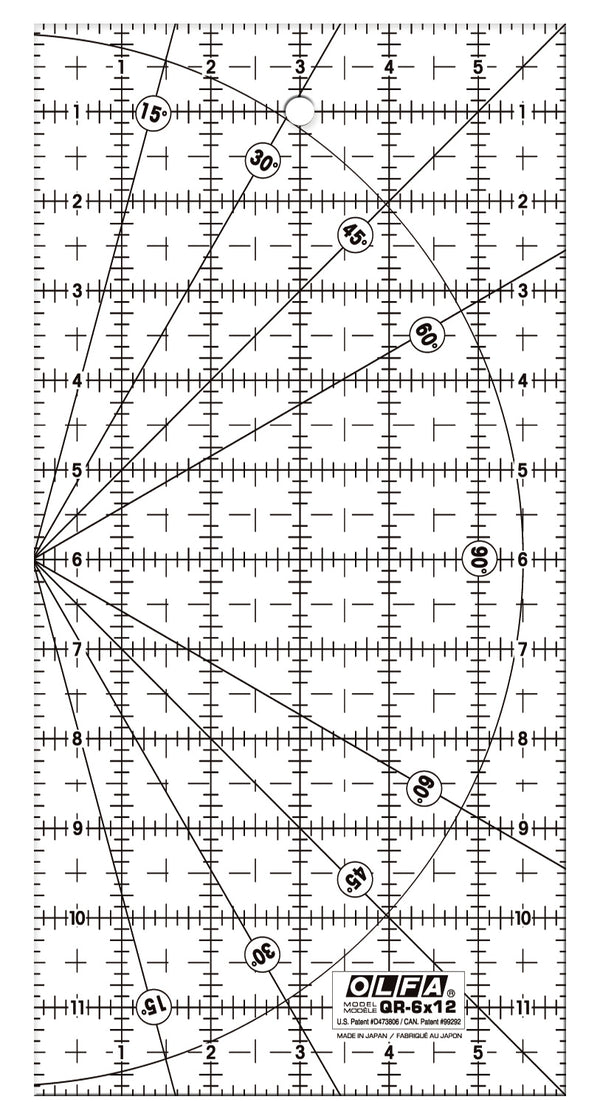
If you’ve ever looked at your OLFA ruler and wondered why it has all those extra angled lines, and what on earth you’d use them for... today’s the day! That 60° marking is about to do all the hard work for you!

Tools:
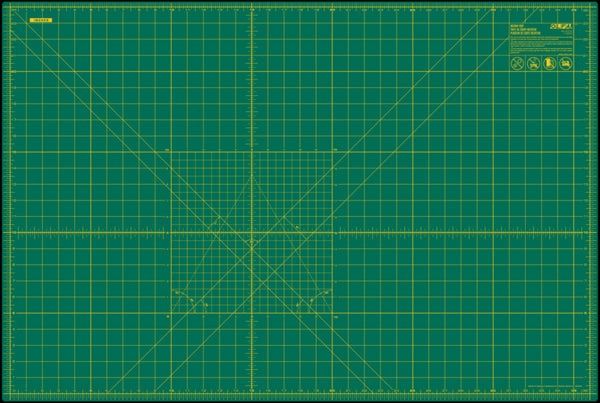
OLFA 24” x 36” Self-Healing Rotary Mat
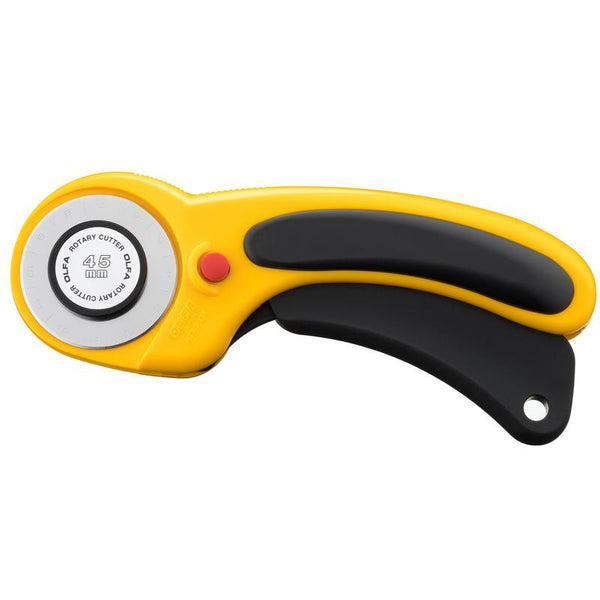
OLFA 45mm Ergonomic Rotary Cutter
OLFA 45mm Blades
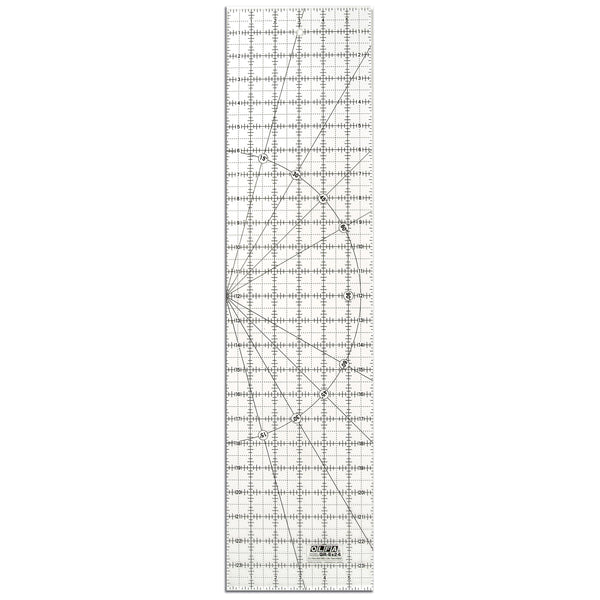
OLFA 6” x 24” Frosted Acrylic Ruler
OLFA 6” x 12” Frosted Acrylic Ruler
Fabric & Supplies:
Fabric Strips
Thread
Sewing Machine
Iron and Ironing Board
Pins
First, you will need to decide on the finished height of your triangles (measured from the flat base to the tip). Once you know that size, add ½" for seam allowances and that will be the width you’ll cut your fabric strip.
For example, if you want a 6" finished triangle, cut your fabric to 6.5" x WOF.
For this tutorial I will be making triangles that finish at 4.5” (to be used in an upcoming star block tutorial), so I will need to cut strips that are 5” x WOF using my OLFA 6” x 24” Frosted Acrylic Ruler.
TIP! When cutting your fabric strips, make sure the edges are straight and parallel. This accuracy gives you a solid starting point for every cut that follows.

Now is when you get to start using the 60° line for all the angled cuts! This line allows you to tilt the ruler, so the edge forms the correct angle for an equilateral triangle.
Lay the fabric strip horizontally with the long edge closest to you.
Place your ruler on the strip. Rotate the ruler until the 60° line on the ruler lines up with the bottom edge of the fabric strip. If necessary, slide the ruler side to side to ensure you will remove the entire selvedge edge when you make your first cut.
Once aligned, cut to create a clean starting point.


Next, turn your ruler so that the 60º line is on the fabric edge that you just cut, and the point of the ruler sits at the bottom edge of the fabric. Once aligned, you are ready to make the next cut.


For the next triangle, rotate the ruler back again so that the 60º line is running along the bottom edge of the fabric and the ruler edge lines up at the triangle point and then cut.

You’ll now repeat this simple rhythm until you’ve cut all your triangles.
Extra Tips!
· To save time, fold your fabric strip in half widthwise so you can cut two triangles at a time!
· Because you are cutting the fabric on the bias, this can make the fabric shift and stretch more easily. Handle them gently and avoid pulling or tugging as you sew and press.
· Light starch before cutting will help stabilize the edges and keep everything crisp.
· Place your hand high on the ruler, keeping pressure over the area being cut.
· Cut slowly and confidently!
· Ensure you have a sharp blade so there is no drag or resistance that can distort the fabric.

Now let’s sew them together!
Place two triangles right sides together and align the edges and tips carefully.

Sew together with a ¼" seam allowance.

Press seams open for the flattest results or press to one side if your layout requires nesting. Just be consistent!
Note: sewing triangles together will result in what is called “dog ears.” Do not trim them!

You can now add your next triangle to create a row.
Place the next triangle RST and align the edges. The point of the triangle will align with the tip of the dog ear from the seam you previously sewed. Sew with a ¼" seam allowance and press.


TIP! You should have ¼” overlap where the triangle points meet. This will be your seam allowance when sewing your rows together.

Continue adding triangles until your row is the desired length. Repeat steps for all required rows.

To sew rows together, place RST and pin any spot where triangles meet, so your points stay sharp.


Sew a ¼” seam allowance along length of row and press.


TIP! If your points aren’t matching perfectly, measure and check your seam allowance first. Even a tiny difference can add up quickly. Also remember that learning new things takes time and practice!


Working with 60° triangles is all about accuracy and gentle handling. Once you get the feel for cutting and sewing on the bias, you’ll find these shapes come together beautifully. Take your time, press as you go, and enjoy the rhythm of those perfect little points coming to life.