
Kentucky-Tennessee Sewing Machine Log Cabin Dust Cover

Designer: Daisi Toegel
Instagram: @daisitoegel
Website: www.flowersew.com
---------------------------------
Category: Patchwork
Size: 16” x 32”
Skill level: Confident Beginner
Pattern notes:
- Assume ¼” seam allowance***.
- FE = Fat Eight = 9” x 21”
- FQ = Fat Quarter = 18” x 21”
- Assume 42” WOF (width of fabric) for yardage.

Fabric Requirements:
|
Fabric 1 (c1) = Fan Olive |
1 FE |
|
Fabric 2 (c2) = Itsy Bitsy Flower |
1 FE |
|
Fabric 3 (c3) = Flower Stems |
1 FE |
|
Fabric 4 (c4) = Kentucky |
1 FE |
|
Fabric 5 (c5) = Flowers Navy |
1 FE |
|
Fabric 6 (c6) = Fan Sage |
1 FE |
|
Fabric 7 (c7) = Fan Steel |
1 FE |
|
Fabric 8 (c8) = Flowers Cream |
1 FE |
|
Fabric 9(c9) = Blender Butterscotch |
1 FQ |
|
Fabric 10 (c10) = Blender Marigold |
2/3 yd |
Tools needed:
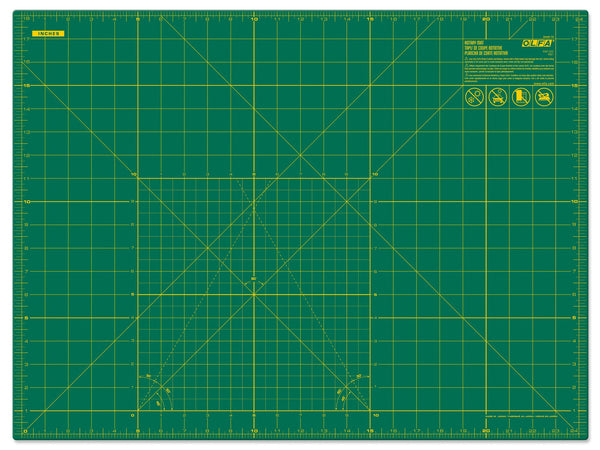
OLFA RM-SG-01 18" x 24" Green Double-Sided, Self-Healing Rotary Mat
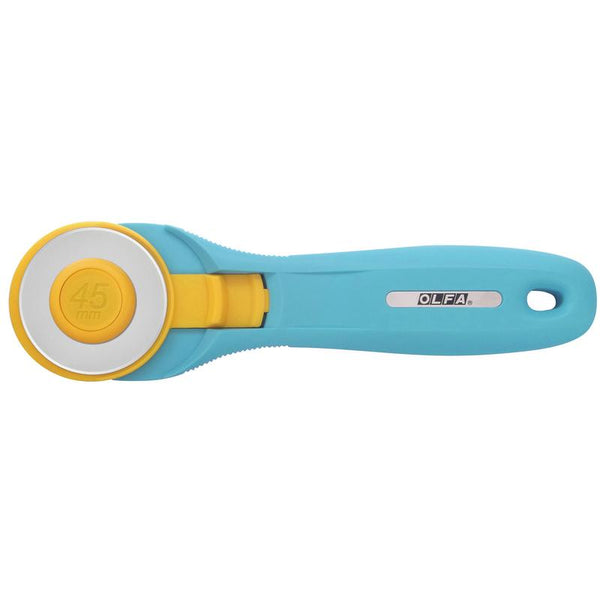
OLFA RTY-2C/YEL 45MM Rotary Cutter
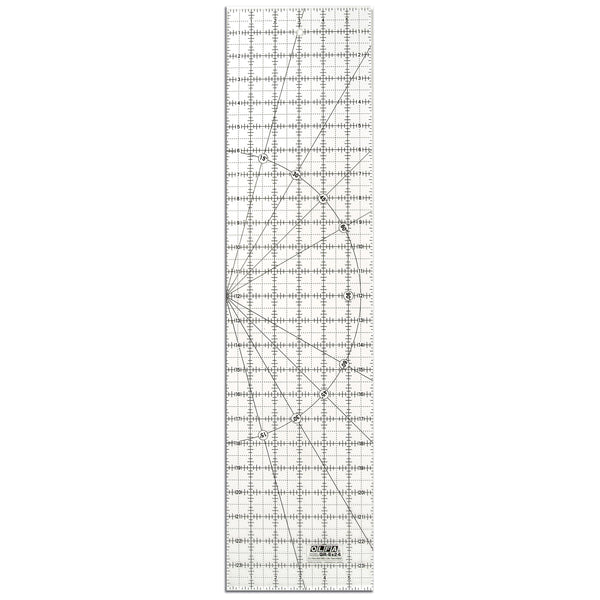
OLFA QR-6x24 6”x24” Frosted Acrylic Ruler
Download & print label for organization

Cutting instructions:
From fabrics c1 through c8 cut from each FE (1) 2 ½” square and (4) 1 ½” x WOF strips, and sub-cut from each strip as follows:
(for efficiency, the cutting is overestimated, meaning there will be scrap pieces from each strip).
(1) 8 ½” x 1 ½” and (2) 5 ½” x 1 ½”
(2) 7 ½” x 1 ½”
(2) 6 ½” x 1 ½”
(2) 4 ½” x 1 ½”, (2) 3 ½” x 1 ½” and (1) 2 ½” x 1 ½”
From fabric c9, cut (6) 2 ½” x WOF strips and join them together on the 45-degree angle, press lengthwise with right sides out to make the binding strips. Set it aside.
From fabric c10 cut (4) 2” x 16” for the ties, and the remaining use for backing, aligning the project on the WOF to fit.

As the diagram below shows, there will be (8) log cabin blocks in this project sewn into (4) rows of (2) blocks. Each block measures 8 ½” square unfinished size.
For efficiency, gather the pieces of each block to sew one by one.

Group the pieces for each block as follows:
(Use the LABEL sheet to keep organized.)
BLOCK 1:
(1) c1 8 ½” x 1 ½”
(2) c1 7 ½” x 1 ½”
(1) c1 6 ½” x 1 ½”
(1) c2 6 ½” x 1 ½”
(2) c2 5 ½” x 1 ½”
(1) c2 4 ½” x 1 ½”
(1) c3 4 ½” x 1 ½”
(2) c3 3 ½” x 1 ½”
(1) c3 2 ½” x 1 ½”
(1) c7 2 ½” square
BLOCK 2:
(1) c2 8 ½” x 1 ½”
(2) c2 7 ½” x 1 ½”
(1) c2 6 ½” x 1 ½”
(1) c4 6 ½” x 1 ½”
(2) c4 5 ½” x 1 ½”
(1) c4 4 ½” x 1 ½”
(1) c1 4 ½” x 1 ½”
(2) c1 3 ½” x 1 ½”
(1) c1 2 ½” x 1 ½”
(1) c8 2 ½” square
BLOCK 3:
(1) c5 8 ½” x 1 ½”
(2) c5 7 ½” x 1 ½”
(1) c5 6 ½” x 1 ½”
(1) c3 6 ½” x 1 ½”
(2) c3 5 ½” x 1 ½”
(1) c3 4 ½” x 1 ½”
(1) c6 4 ½” x 1 ½”
(2) c6 3 ½” x 1 ½”
(1) c6 2 ½” x 1 ½”
(1) c4 2 ½” square
BLOCK 4:
(1) c4 8 ½” x 1 ½”
(2) c4 7 ½” x 1 ½”
(1) c4 6 ½” x 1 ½”
(1) c6 6 ½” x 1 ½”
(2) c6 5 ½” x 1 ½”
(1) c6 4 ½” x 1 ½”
(1) c7 4 ½” x 1 ½”
(2) c7 3 ½” x 1 ½”
(1) c7 2 ½” x 1 ½”
(1) c3 2 ½” square
BLOCK 5:
(1) c3 8 ½” x 1 ½”
(2) c3 7 ½” x 1 ½”
(1) c3 6 ½” x 1 ½”
(1) c1 6 ½” x 1 ½”
(2) c1 5 ½” x 1 ½”
(1) c1 4 ½” x 1 ½”
(1) c4 4 ½” x 1 ½”
(2) c4 3 ½” x 1 ½”
(1) c4 2 ½” x 1 ½”
(1) c2 2 ½” square
BLOCK 6:
(1) c6 8 ½” x 1 ½”
(2) c6 7 ½” x 1 ½”
(1) c6 6 ½” x 1 ½”
(1) c7 6 ½” x 1 ½”
(2) c7 5 ½” x 1 ½”
(1) c7 4 ½” x 1 ½”
(1) c8 4 ½” x 1 ½”
(2) c8 3 ½” x 1 ½”
(1) c8 2 ½” x 1 ½”
(1) c5 2 ½” square
BLOCK 7:
(1) c7 8 ½” x 1 ½”
(2) c7 7 ½” x 1 ½”
(1) c7 6 ½” x 1 ½”
(1) c8 6 ½” x 1 ½”
(2) c8 5 ½” x 1 ½”
(1) c8 4 ½” x 1 ½”
(1) c5 4 ½” x 1 ½”
(2) c5 3 ½” x 1 ½”
(1) c5 2 ½” x 1 ½”
(1) c6 2 ½” square
BLOCK 8:
(1) c8 8 ½” x 1 ½”
(2) c8 7 ½” x 1 ½”
(1) c8 6 ½” x 1 ½”
(1) c5 6 ½” x 1 ½”
(2) c5 5 ½” x 1 ½”
(1) c5 4 ½” x 1 ½”
(1) c2 4 ½” x 1 ½”
(2) c2 3 ½” x 1 ½”
(1) c2 2 ½” x 1 ½”
(1) c1 2 ½” square

The chart below shows a block example, and the placement of each piece, that follows for all blocks.

Press the seams towards each recently added strip.

An accurate seam allowance is needed and starching is recommended; both of these elements will help prevent stretching of the strips that can result in a wonky block.

When joining the blocks to make the rows, and the rows together, press seams open.

Give the patchwork top a good press before basting.

Make the tie strips from the (4) c10 fabric strips (2” x 16”).
Step 1: Fold one short side in about 1/4in and press.
Step 2: Fold the strip lengthwise with right side out and press.
Step 3: Open the strip and fold each long side in towards the crease and press.
Step 4: Fold the long sides together and sew on both sides to close, and topstitch.
Repeat the process to make (4) tie strips.

Baste and quilt the project using your preferred method.
Sew the binding on the front side of the project.

Before you turn the binding towards the back for topstitching, sew the tie strips in place.
Sew each one as the picture below shows, 8 inches up from the corner of each short side:

Fold the binding towards the back, clip it in place all along and turn the project facing the patchwork up on the sewing machine plate and stitch in the ditch to finish.

You’re all done, cover the machine and tie each side of the dust cover to hold it in place.