
Scissors Deep Dive: Types, Sizes & Uses for Quilters and Crafters

Scissors are one of the most frequently used tools in any sewing or craft studio, yet they are often treated as a single-category tool. In reality, scissor size, blade style, and edge design all play an important role in how comfortably and accurately you cut. The materials being cut—fabric, paper, vinyl, leather, or even thread—also influence how scissors perform. OLFA offers a focused range of scissors designed to support specific cutting needs, allowing makers to choose a tool that matches the task instead of forcing one pair to do everything.
Using the correct scissors for each material allows the blades to work efficiently without excessive pressure. When scissors are mismatched to the task, materials can shift, edges become uneven, and blades wear more quickly. Matching scissors to both the material and the job supports cleaner cuts and a smoother workflow throughout the studio.

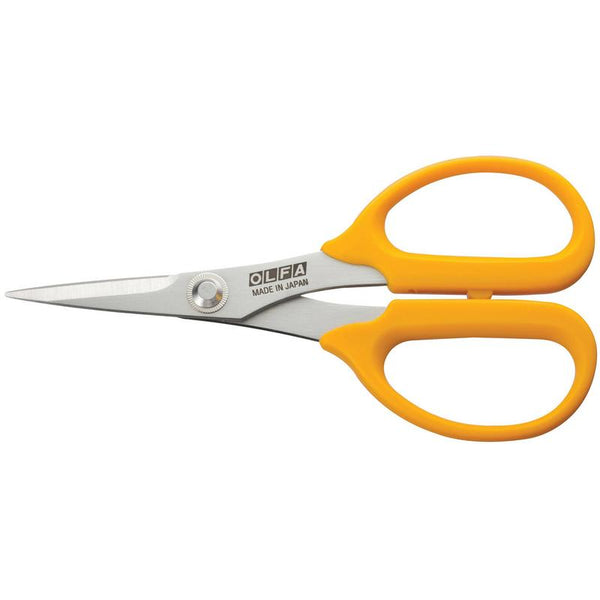
Fabric is the material most commonly cut with scissors, particularly during trimming and finishing. For detailed work such as trimming threads, cutting appliqué pieces, clipping curves, and refining seam allowances close to stitching lines, the OLFA 5-Inch SCS-4 Precision Appliqué Scissors are designed for control and accuracy. Their shorter blade length allows for quick, precise movements without disturbing surrounding fabric, making them an ideal choice to keep within reach at the sewing machine.
For general fabric cutting and trimming, many makers prefer a slightly longer scissor. Mid-size scissors offer a balance of control and cutting length, making them comfortable for extended use when cutting fabric pieces, trimming blocks, or working on smaller projects such as bags, accessories, and home décor items.

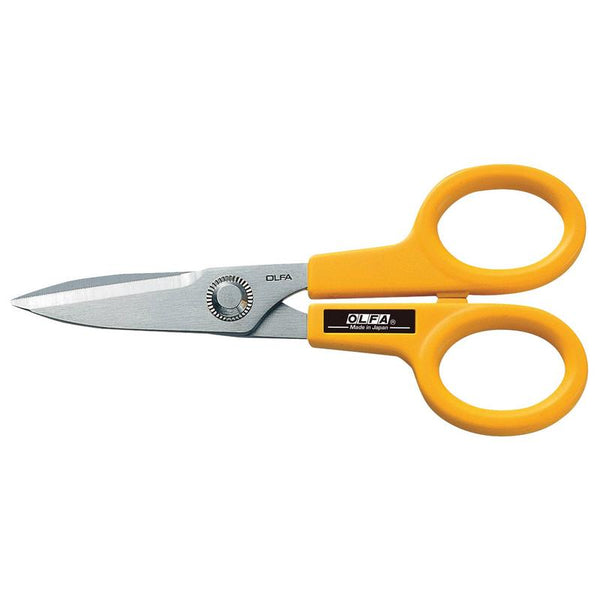
Paper and paper-based materials place different demands on scissors than fabric. Templates, pattern pieces, cardstock, and craft paper benefit from steady control and clean edges. The OLFA 5-Inch SCS-1 Serrated-Edge Stainless Steel Scissors are well suited for this type of work. The serrated edge helps grip paper as you cut, reducing slipping and improving accuracy—especially when working with smaller shapes or layered templates.
Because paper dulls blades more quickly than fabric, it’s important to keep paper-dedicated scissors separate from fabric scissors. This simple habit helps preserve cutting performance and ensures clean results across all projects.

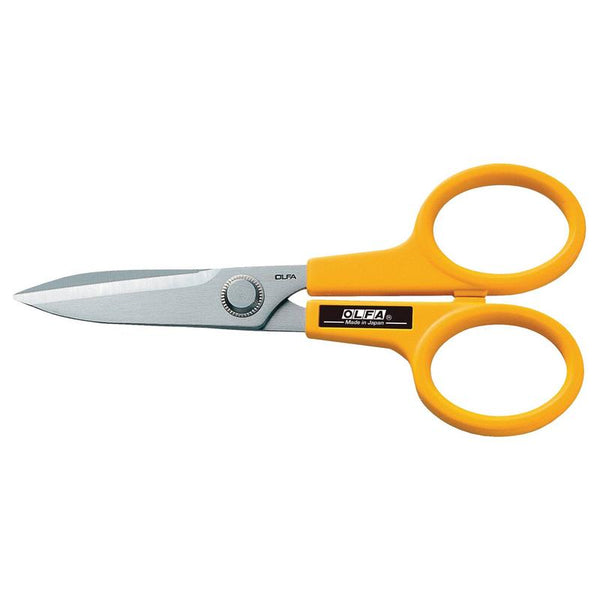
Vinyl and synthetic materials can be more challenging to cut due to their tendency to shift or resist the blade. Serrated-edge scissors help hold these materials in place as you cut, improving control and reducing movement. Both the OLFA 5-Inch SCS-1 Serrated-Edge Scissors and the OLFA 7-Inch SCS-2 Serrated-Edge Stainless Steel Scissors perform well on vinyl, depending on the size of the cut.
Shorter serrated scissors offer control for trimming and detail work, while longer serrated scissors provide smoother, more continuous cuts when working with larger vinyl pieces for bags, accessories, labels, or craft projects.

Leather and thicker materials require scissors designed for strength and stability. The OLFA 7-Inch SCS-2 Serrated-Edge Stainless Steel Scissors are especially effective for cutting leather and heavier materials. The longer blade length provides added leverage, while the serrated edge helps prevent slipping as the blades move through thicker layers.

Scissors are also used constantly for studio support tasks. Trimming threads, cutting stabilizers, snipping interfacing, opening packaging, and refining project components all rely on having the right scissors within reach. The OLFA 5-Inch SCS-4 Precision Appliqué Scissors are particularly useful for thread trimming and finishing work.

Blade edge design plays a key role in material performance. Smooth knife-edge blades create clean, crisp cuts on cotton and tightly woven fabrics. Serrated-edge blades feature fine teeth that grip the material as you cut, helping prevent shifting and improving control on slippery, layered, or thicker materials.

Proper care is essential regardless of material. Fabric scissors should be reserved exclusively for fabric, while separate scissors should be used for paper, vinyl, or other non-fabric materials. Scissors should always be stored closed and handled carefully to protect blade alignment.

Understanding how specific OLFA scissors interact with different materials reinforces the importance of selecting the right tool for each task. When scissors are matched to material and purpose, cutting becomes more accurate, more comfortable, and more efficient across quilting, sewing, and craft projects.
At the core of every OLFA scissor design is a commitment to solid construction and long‑lasting performance. High‑quality stainless‑steel blades are crafted to maintain sharpness and proper alignment through repeated use, while reinforced components provide the strength needed for both detailed work and heavier cutting tasks. This careful attention to materials and build quality helps ensure reliable results over time, supporting clean, controlled cuts across sewing, quilting, and craft projects. When durability and construction work together, scissors become dependable tools makers can rely on project after project.
By Heidi Pridemore