
How to Make a String Block!

Designer: Erin Kroeker
Website: www.theblanketstatement.ca
Instagram: @theblanketstatement
------------------------------------------------------
Skill Level: Beginner

String blocks are a long-time quilting favourite, originally used as a practical way to use up scraps and make the most of every bit of fabric. Instead of cutting precise shapes, narrow strips are sewn together to build the design as you go.
Today, quilters love string blocks for their flexibility. They’re perfect for experimenting with colour and value, and work beautifully in both scrappy and curated palettes. String blocks are forgiving, creative, and endlessly adaptable.

Tools:
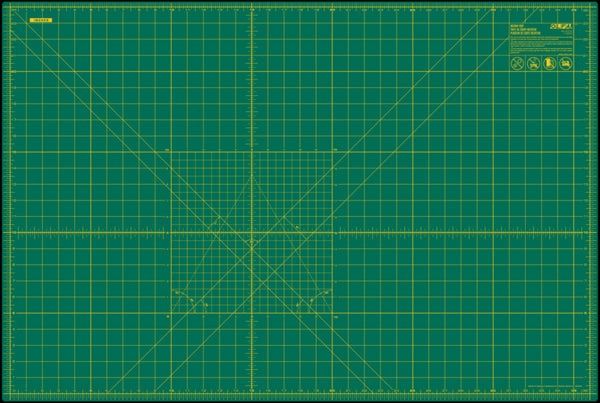
OLFA 24” x 36” Self-Healing Rotary Mat
OLFA 45mm Ergonomic Rotary Cutter
OLFA 45mm Endurance Rotary Blades
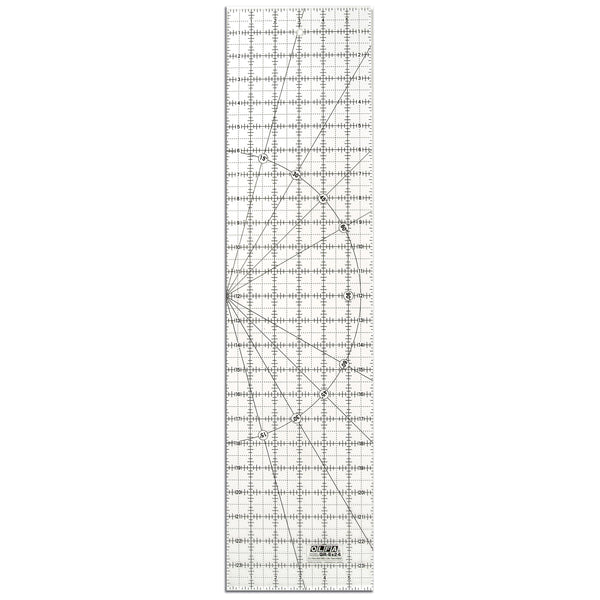
OLFA 6” x 24” Frosted Acrylic Ruler
Fabric & Supplies:
Assorted Fabric Strips (“strings”)
· Width: Can be any size but a good starting point is approx. 1 ½" – 2 ½" (varied widths add interest)
Foundation Fabric (muslin or lightweight cotton)
· Size: 1” larger than your desired finished block
Thread
Sewing Machine
Iron and Ironing Board
Pins

Step 1: Cut Fabric
Cut foundation square from muslin or lightweight cotton.
Tip! I am making an 18” finished block (18.5” unfinished) so I am cutting my square to be 19” x 19”. This allows for some trimming room at the end.

Cut fabric into multiple strips or “strings”.
Tip! This is a great way to use scraps and off cuts. You can cut all the strings to be the same width for a uniform look or varied widths for more improv vibe! I wanted to create a very graphic, black and white block, so I cut my strings to all be the 2.5” wide.

Step 2: Sew Strings
Take a moment to decide whether you’d like your string block to be planned or more random. You can lay out the strings on top of your foundation block to see if you like the order and placement before sewing, or you can just start stitching. String blocks are very forgiving, making them a great way to dip your toes into improv if it’s not something you usually try.
Now it’s time to sew!
Lay your foundation square right side up. Position your first strip right side up, diagonally across the center of the square. Make sure it extends beyond the foundation square.
Tip! If you want this strip to be perfectly centred, first find the centre of each end by lightly folding it in half and finger-pressing. Match that centre crease to the points of the foundation square and pin in place.

Place the next strip, right sides together along one edge of the center strip.
 Sew with a ¼" seam along a long edge. Flip the strip open and press.


Continue adding strips in the same way, working toward one corner.


Once one side is filled, rotate the block and repeat on the opposite side, beginning at the center strip. Don’t worry if the block looks messy around the edges, that’s expected!


Step 3: Trim
To square up the block, turn the block over so the foundation side is facing up.

Using the foundation as a guide, trim all sides down to your required size, making sure the corners are square.

String blocks are endlessly versatile! You can use them on their own, mix them into a sampler, play with colour and value, or let them shine as a full quilt design. They’re meant to be relaxed and a little imperfect, so trust the process and enjoy the uniqueness of each block.

This is the final block in the series we’ve been working through, and next we’ll be bringing all the blocks together into a sampler-style quilt. Stay tuned to see how it all comes together!